When your garage door opener is not working, the simplest explanation often involves power. Before assuming major mechanical failure, verify that your opener receives electricity. Check the outlet where the opener plugs in; occasionally, the unit becomes unplugged during garage cleaning or storage reorganization. Additionally, test the outlet with another device to confirm it delivers power.
If the outlet works but the opener remains dead, examine your home’s circuit breaker panel. Garage door openers typically draw significant current during operation, and a tripped breaker indicates an electrical overload. Reset the breaker and test the opener again. However, if the breaker trips repeatedly, this signals a deeper electrical problem requiring professional attention.
Furthermore, Central Florida’s lightning activity makes surge protectors essential for garage door openers. A direct or nearby lightning strike can destroy circuit boards instantly. If your opener failed during or immediately after a storm, power surge damage is the likely culprit. Our technicians can replace damaged circuit boards and install surge protection to prevent future failures.
Table of Contents
ToggleRemote Control and Keypad Failures
Remote control malfunctions represent one of the most common reasons homeowners report their garage door opener not working. Fortunately, these issues usually resolve quickly. Start by replacing the batteries in your remote; weak batteries cause intermittent or complete signal failure. After battery replacement, test the remote from various distances to rule out range issues.
If new batteries do not restore function, the problem may involve signal interference or programming loss. Nearby LED lights, wireless routers, or security systems can disrupt the radio frequency your remote uses to communicate with the opener. Similarly, power outages sometimes erase remote programming, requiring you to reprogram the device according to your opener manufacturer’s instructions.
Outdoor keypads mounted on your garage exterior suffer additional exposure to Florida’s harsh sun and rain. Over time, moisture intrusion corrodes internal contacts, and UV exposure degrades plastic buttons. If your keypad responds inconsistently or not at all, replacement often provides the most reliable solution. Our team can upgrade you to modern wireless keypads with weather-resistant housing.
Safety Sensor Misalignment and Obstruction
Federal safety regulations require all automatic garage door openers manufactured after 1993 to include photo eye sensors near the floor on both sides of the door opening. These sensors prevent the door from closing on obstacles, pets, or children. When these safety sensors malfunction, your opener may refuse to close the door entirely, or the door may reverse immediately after starting downward.
Sensor problems rank among the top causes of a garage door opener not working properly. In Central Florida, dust, pollen, and humidity film accumulate on sensor lenses, blocking the infrared beam between the two units. Cleaning the lenses with a soft cloth often restores function immediately. Additionally, check that nothing obstructs the sensor path; lawn equipment, storage boxes, or even spider webs can interrupt the beam.
Physical misalignment presents another frequent issue. The sensors must face each other precisely; if one gets bumped by a bicycle, trash can, or lawn equipment, the invisible beam breaks and the opener stops working correctly. Look for steady indicator lights on both sensors; blinking or absent lights indicate misalignment requiring adjustment. Our technicians use laser alignment tools to ensure perfect positioning.
Worn Motor and Gear Assembly
Garage door opener motors endure thousands of cycles per year, and eventually internal components wear out. When gears strip or motors burn out, the opener may hum without moving the door, or it may fail to respond entirely. Grinding noises during operation typically signal gear wear, while complete silence suggests motor or circuit board failure.
In Central Florida, high humidity causes internal condensation within opener housings, accelerating rust on metal gears and corrosion on electrical contacts. Additionally, the constant strain of lifting heavy doors in hot conditions forces motors to work harder, shortening their lifespan. If your opener is more than ten years old and showing signs of struggle, replacement often proves more cost-effective than repeated repairs.
At Cooper’s Garage Door Repair, we stock replacement motors and gear assemblies for all major brands including LiftMaster, Chamberlain, Genie, and Craftsman. Our technicians can often restore older openers to reliable operation, or we can guide you through upgrading to a modern smart opener with smartphone control and enhanced security features. Learn more about our comprehensive garage door opener repair services for all major brands.
Broken Springs and Cable Issues
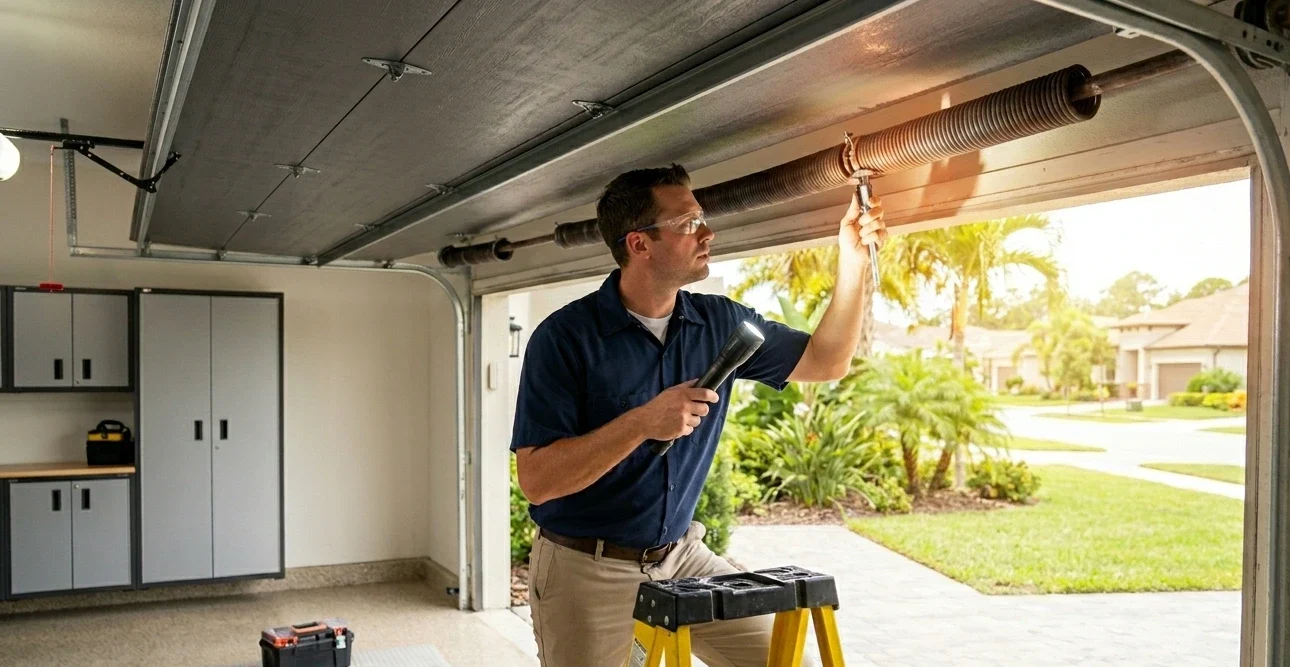
While not part of the opener itself, broken springs or cables frequently cause homeowners to think their garage door opener is not working. When torsion or extension springs break, the opener motor runs but cannot lift the door because the springs no longer counterbalance the door’s weight. You may hear the motor straining, or the door may move a few inches and stop.
Similarly, frayed or snapped cables allow one side of the door to drop, creating uneven stress that jams the system. These mechanical failures create dangerous situations because the heavy door can slam shut unexpectedly. Never attempt to operate a garage door with broken springs or cables; the opener motor will overheat and sustain additional damage.
If you suspect spring or cable failure, contact Cooper’s Garage Door Repair immediately. Our certified technicians replace these high-tension components safely and restore balanced operation. We recommend inspecting springs and cables during every service call to catch wear before catastrophic failure occurs. For more information on spring longevity, read our detailed guide on how long garage door springs last.
Circuit Board and Logic Control Failures
Modern garage door openers rely on sophisticated circuit boards to manage motor speed, safety systems, and wireless communication. When these logic boards fail due to power surges, age, or moisture damage, the opener becomes completely unresponsive or behaves erratically. Symptoms include random door movement, failure to respond to any controls, or incomplete opening and closing cycles.
Circuit board replacement requires precise matching to your opener model and brand. Our technicians carry diagnostic equipment to test logic boards on-site and confirm whether replacement or full opener replacement makes more sense. In many cases, upgrading to a new opener with modern safety features and smart connectivity provides better long-term value than repairing an aging unit.
DIY Troubleshooting: Safe Steps Before Calling a Professional
Step 1: Verify Power and Connections
Begin your troubleshooting by confirming that your opener receives power. Check the wall outlet, test the circuit breaker, and inspect the power cord for damage. If the opener has a backup battery system, verify that the battery maintains charge; weak backup batteries sometimes cause confusing symptoms.
Step 2: Test Multiple Control Methods
Try operating the door using the wall-mounted button, the remote control, and any keypad or smartphone app. If the wall button works but the remote does not, you have isolated the problem to the remote or its signal path. Conversely, if no control method functions, the issue likely involves the opener itself or its power supply.
Step 3: Inspect Safety Sensors
Clean both photo eye lenses with a soft, dry cloth. Ensure the sensors face each other directly and show steady indicator lights. Remove any objects blocking the beam path. Adjust the sensor brackets slightly if needed to restore alignment. Test the door operation after each adjustment.
Step 4: Check for Mechanical Obstructions
Manually lift the door after disconnecting the opener using the emergency release cord. If the door feels excessively heavy or binds during manual operation, mechanical problems such as broken springs, worn rollers, or track misalignment are present. Do not reconnect the opener until these issues are resolved.
Step 5: Listen for Diagnostic Sounds
A humming motor that does not move the door suggests gear or drive mechanism failure. Clicking sounds without motor response indicate circuit board or relay problems. Grinding noises point to worn mechanical components. These auditory clues help technicians diagnose issues faster when you call for service.
When to Call Cooper’s Garage Door Repair for Professional Help
While some garage door opener not working scenarios resolve with simple homeowner intervention, others demand professional expertise. Contact Cooper’s Garage Door Repair immediately if you encounter any of the following situations:
- The opener motor runs but the door does not move, indicating spring or cable failure
- You smell burning or see smoke from the opener unit
- The door reverses repeatedly despite clear sensor paths
- The opener responds erratically or operates on its own
- You have attempted basic troubleshooting without success
- The opener is more than fifteen years old and failing frequently
Our Central Florida team provides same-day service throughout Orlando, Kissimmee, Sanford, Deltona, and surrounding communities. We arrive with fully stocked service vehicles, diagnostic equipment, and replacement parts for all major brands. Furthermore, our technicians perform comprehensive safety inspections during every service call to identify developing problems before they cause complete failure.
Preventive Maintenance for Central Florida Garage Door Openers
Regular maintenance significantly reduces the likelihood of discovering your garage door opener not working at the worst possible moment. In Central Florida’s demanding climate, proactive care becomes even more essential.
Lubrication and Cleaning
Apply silicone-based lubricant to rollers, hinges, and springs every three to four months. Florida humidity washes away lubrication faster than in drier regions, so more frequent application prevents binding and excess motor strain. Avoid grease or oil-based lubricants that attract dust and grit.
Clean the opener’s external housing, sensors, and remote controls regularly. Remove dust, pollen, and cobwebs that interfere with electronics and mechanical movement. Pay special attention to outdoor keypads; moisture and UV exposure degrade these components quickly.
Professional Tune-Up Schedule
Schedule professional maintenance annually at minimum. For doors facing direct afternoon sun or operating multiple times daily, consider semi-annual service. Our maintenance program includes spring tension adjustment, hardware tightening, safety system testing, and lubrication application using products formulated for Florida conditions.
Surge Protection Installation
Given Central Florida’s lightning activity, install surge protectors on your garage door opener circuit. These inexpensive devices shield sensitive electronics from voltage spikes that destroy circuit boards. Our technicians can recommend and install appropriate protection during any service visit.
Battery Backup Systems
Florida’s hurricane season brings extended power outages that leave standard openers inoperable. Consider upgrading to an opener with integrated battery backup, or add a standalone backup system to your existing unit. This investment ensures you can access your garage during emergencies when you need it most.
FAQ: Common Questions About Garage Door Opener Problems in Central Florida
Why does my garage door opener work sometimes but not others?
Intermittent operation usually indicates loose wiring connections, failing remote batteries, or overheating motors. In Central Florida, thermal expansion from extreme heat can cause internal connections to loosen temporarily. Additionally, humidity corrosion on electrical contacts creates resistance that varies with moisture levels. Our technicians use thermal imaging and electrical testing to pinpoint these elusive problems.
Can Florida humidity really damage my garage door opener?
Absolutely. High humidity causes condensation inside opener housings, leading to rust on metal gears and corrosion on circuit boards. Furthermore, humidity swells wooden doors, increasing the weight your opener must lift and accelerating motor wear. Proper ventilation in your garage and regular maintenance mitigate these effects significantly.
How long should a garage door opener last in Central Florida?
With proper maintenance, a quality garage door opener typically lasts ten to fifteen years in Central Florida. However, the region’s heat, humidity, and lightning exposure can reduce lifespan compared to milder climates. Investing in higher-end models with better weather sealing and surge protection extends operational life.
Is it safe to repair a garage door opener myself?
Basic troubleshooting such as battery replacement and sensor cleaning is safe for homeowners. However, internal electrical repairs, spring work, and motor replacement involve significant safety risks. Garage door springs store tremendous tension, and electrical components carry lethal voltage. The <a href=”https://www.cpsc.gov/” rel=”nofollow”> emphasizes that professional repair reduces accident risks and ensures warranty compliance.
Why does my opener make grinding noises but the door barely moves?
Grinding noises with minimal door movement strongly suggest stripped drive gears or a failing motor. The motor runs but cannot transfer power to the door mechanism. This condition worsens quickly; continued operation destroys additional components. Prompt professional service prevents costlier repairs.
What causes my garage door to reverse immediately after touching the floor?
This behavior indicates travel limit settings that need adjustment. The opener believes it has encountered an obstacle and reverses for safety. Similarly, excessive friction in the door system can trigger the safety reversal mechanism. Our technicians recalibrate limit settings and resolve underlying friction sources.
Should I repair my old opener or replace it entirely?
If your opener is under ten years old and the repair cost is moderate, repair usually makes sense. However, for units over fifteen years old requiring major component replacement, upgrading to a modern smart opener provides better value, enhanced safety features, and improved energy efficiency. We provide honest assessments to help you make the right decision. For more details on typical repair timelines, read our article about how long garage door repair takes.
Conclusion: Restore Your Garage Door Opener to Reliable Operation
A garage door opener not working disrupts your schedule, compromises security, and creates unnecessary stress. Fortunately, most opener problems have identifiable causes and effective solutions. From simple power issues and remote battery replacements to complex circuit board failures and motor rebuilds, understanding the root cause empowers you to take appropriate action.
In Central Florida, climate factors add unique challenges that make professional expertise especially valuable. Cooper’s Garage Door Repair brings years of regional experience, climate-specific parts inventory, and same-day service commitment to every call. Whether you need emergency repairs, preventive maintenance, or a complete opener upgrade, our certified technicians deliver lasting solutions.
Do not let a malfunctioning garage door opener trap your vehicle or leave your home vulnerable. Contact Cooper’s Garage Door Repair today for your free estimate. We serve Orlando, Kissimmee, Sanford, Deltona, and all surrounding Central Florida communities with the fast, reliable service you deserve. Call us now or request your quote online; your garage door will be working smoothly again before you know it.