Your garage door operates silently in the background until it suddenly does not. In Central Florida, where intense heat, high humidity, and blazing sunshine test every mechanical component, garage door problems appear more frequently than in milder climates. Can heat damage garage door springs? The short answer is yes, and understanding this connection helps you spot trouble early and avoid costly emergencies.
At Cooper’s Garage Door Repair, we have served Central Florida homeowners and businesses for over 15 years, diagnosing thousands of garage door repair calls across Orlando, Tampa, Kissimmee, and surrounding communities. Our certified technicians encounter heat-related spring failures repeatedly; therefore, we have compiled this comprehensive guide to help you recognize, prevent, and resolve heat damage to your garage door springs.
In this article, you will discover exactly how Central Florida’s extreme temperatures affect spring longevity, the warning signs of heat-damaged springs, and practical steps to protect your investment. Additionally, we will explain when professional intervention becomes necessary and how our team delivers fast, reliable solutions.
Table of Contents
ToggleHow Central Florida Heat Affects Garage Door Springs
The Science Behind Heat and Metal Fatigue
Garage door springs are made of tightly wound steel, and like all metals, they respond to temperature changes. When exposed to prolonged high temperatures, metal expands and contracts repeatedly. This constant thermal cycling weakens the molecular structure of the steel over time, leading to metal fatigue. Consequently, the spring loses its ability to store and release energy effectively.
High temperatures can cause the metal to become brittle over time, increasing the risk of spring failure. Heat exposure also induces internal stresses within the spring material that may not be visible on the surface. Differential heating throughout the spring’s structure causes these stresses, leading to warping or cracking. At high temperatures, these changes can cause plastic deformation or metal fatigue, structural damage that weakens a spring over time.
Heat causes metal to expand, which can affect the tension in both torsion and extension springs, potentially leading to imbalances or inconsistent door movement. Similarly, it can also cause door panels to expand resulting in a less smooth operation due to misalignment. Excessive heat can also degrade lubricants, causing them to break down or evaporate, leaving springs and other components dry and more susceptible to wear.
For a deeper understanding of how various components interact, you can review common garage door problems in our service area and how environmental factors contribute to them.
Why Central Florida’s Climate Is Especially Harsh
Central Florida presents a uniquely challenging environment for garage door systems. Summer temperatures regularly exceed 95°F, while garage interiors can reach 120°F or higher. Additionally, high humidity levels accelerate corrosion on metal components, compounding the damage caused by heat alone.
The extreme temperature fluctuations cause metal components to expand and contract repeatedly. Consequently, springs lose tension faster, tracks warp slightly, and lubrication breaks down more quickly than in stable climates. Understanding these regional factors helps explain why certain garage door problems in Central Florida require specialized attention and preventive maintenance.
Moreover, UV exposure degrades weather seals and other plastic or rubber parts, further impacting the overall system performance. For those found in coastal areas, salt corrosion is an all-year concern heightened during hurricane season.
Signs Your Garage Door Springs Are Damaged by Heat
Visual Indicators of Heat-Damaged Springs
Inspecting your garage door springs regularly can reveal early warning signs of heat damage. Look for these visual cues:
- Discoloration or bluing: Overheated steel often develops a blue or purple tint, indicating the metal has reached dangerously high temperatures.
- Gaps or separation: A visible gap in a torsion spring means the coil has snapped, often due to heat-induced brittleness.
- Rust or corrosion: Central Florida humidity combined with heat accelerates rust formation, weakening the spring structure.
- Sagging extension springs: Heat can cause extension springs to lose their elasticity, resulting in visible sagging.
Auditory Clues: What Noises Reveal
A properly functioning garage door operates quietly. When you hear grinding, squealing, or rattling sounds, these noises signal underlying mechanical problems requiring attention. Worn rollers, loose hardware, and inadequate lubrication typically cause excessive noise.
Heat-damaged springs often produce a loud bang when they finally break, similar to a firecracker. Before that catastrophic failure, you might hear creaking or popping sounds as the weakened metal struggles to support the door’s weight.
Operational Changes
Pay attention to how your door behaves during operation. Warning signs include:
- The door feels heavier than usual when lifted manually.
- The door opens unevenly or jerks during movement.
- The garage door opener strains or hums without moving the door.
- The door stops midway or reverses unexpectedly.
These symptoms indicate that the springs are losing their ability to counterbalance the door’s weight, often due to heat-induced weakening.
Types of Garage Door Springs and Their Heat Vulnerability
Torsion Springs: The Durable Choice
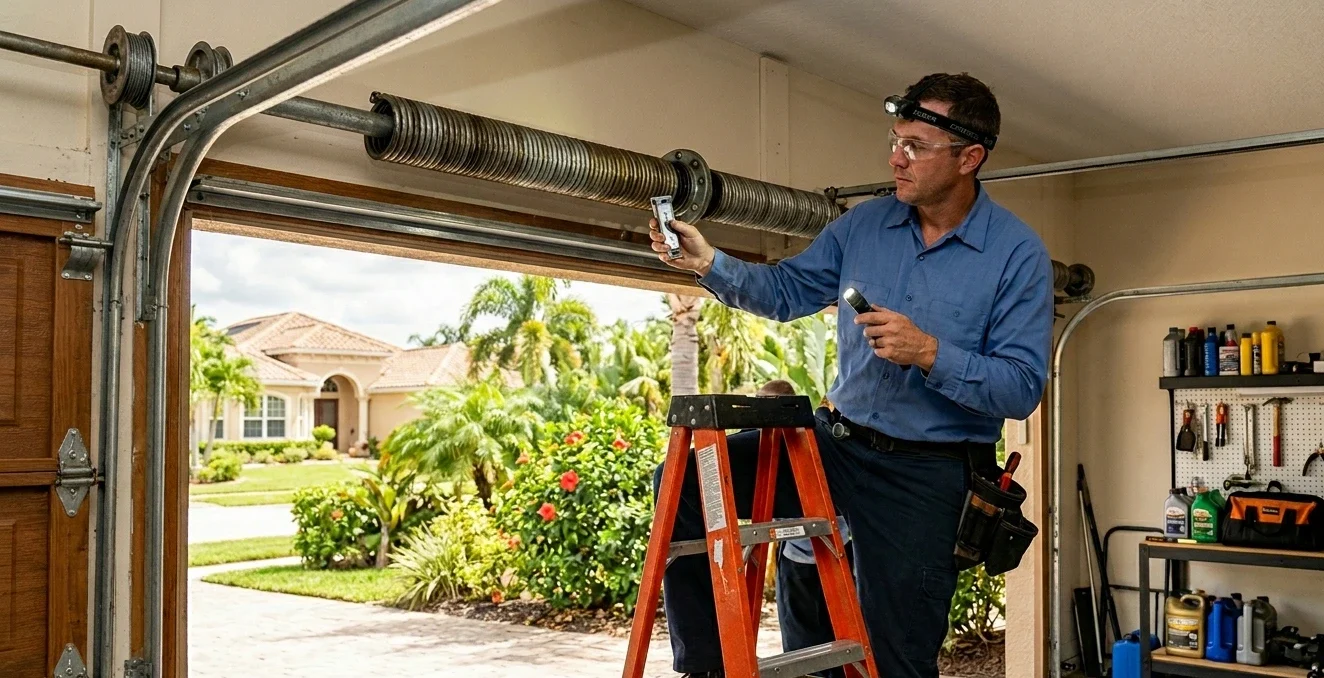
Torsion springs mount above the door header and twist to create torque. They typically last longer than extension springs and are more resistant to heat damage. However, they are not immune. In Central Florida’s intense heat, torsion springs can still suffer from metal fatigue and loss of tension.
Standard torsion springs typically last 7 to 10 years under normal conditions, but Florida heat accelerates metal fatigue significantly. When a spring breaks, you will hear a loud bang resembling a firecracker. Afterward, your door becomes extremely heavy or completely inoperable.
To learn more about expected lifespans, read our detailed post on how long do garage door springs last.
Extension Springs: Higher Risk in Hot Climates
Extension springs run along the horizontal tracks and stretch to counterbalance the door. They are more susceptible to heat damage because the stretching motion combined with thermal expansion creates additional stress. In Central Florida, extension springs often require more frequent replacement than torsion springs.
Both types store tremendous energy and require professional replacement. The International Door Association (IDA) emphasizes that spring replacement should only be performed by trained technicians due to the extreme tension involved.
Preventing Heat Damage to Garage Door Springs in Central Florida
Regular Professional Maintenance
Regular maintenance prevents most heat-related garage door spring problems before they cause emergencies. Annual professional tune-ups identify wear before failures occur, allowing planned repairs rather than urgent service calls. Additionally, proper lubrication and adjustment extend component life significantly.
We recommend professional maintenance annually for standard residential doors. However, doors facing direct afternoon sun or operating multiple times daily benefit from semi-annual service. Florida heat accelerates wear on lubrication and springs; therefore, more frequent attention prevents weather-related failures.
If you are curious about what a service visit entails, check out our guide on how long garage door repair takes so you can plan your schedule accordingly.
Proper Lubrication Techniques
Central Florida heat dries out lubrication faster than milder climates. The Family Handyman maintenance guide recommends silicone-based lubricants specifically formulated for garage door applications in high-temperature environments. Without proper lubrication, hinges bind and rollers drag against tracks.
In Central Florida, we recommend synthetic lubricants for high-temperature areas as they maintain stability, reducing friction. Apply lubricant to springs, hinges, rollers, and bearings every three to four months during the summer.
Garage Ventilation and Insulation
Improving garage ventilation can significantly reduce internal temperatures. Consider installing exhaust fans or vents to promote airflow. Additionally, insulated garage doors help regulate indoor temperatures more effectively, protect stored items, and improve energy efficiency.
Weather seal creates a protective barrier around your garage door, keeping debris out and minimizing temperature fluctuations. Replace worn weatherstripping promptly to maintain a stable environment.
Shade and UV Protection
If your garage door faces direct afternoon sun, consider installing an awning or planting shade trees to reduce heat exposure. UV-resistant coatings on the door surface can also help reflect heat and protect components.
When to Replace vs. Repair Heat-Damaged Springs
The Case for Immediate Replacement
Once a spring breaks, replacement is mandatory rather than optional. Unlike some mechanical components, springs cannot be repaired effectively. Furthermore, operating a door with one broken spring places dangerous strain on remaining components.
Always replace springs in pairs, even if only one has failed. Matched springs ensure balanced operation and prevent premature wear on the new component. Learn about garage door repair costs in Central Florida to budget appropriately.
Upgrading During Replacement
Spring replacement presents an ideal opportunity to upgrade your system. Consider these enhancements:
- High-cycle springs: Double or triple standard lifespans, ideal for Florida’s demanding climate.
- Oil-tempered springs: Superior corrosion resistance for humid climates.
- Conversion to torsion system: If you currently have extension springs, upgrading to torsion springs offers better heat resistance.
Our technicians can assess your specific door and usage patterns to recommend optimal upgrades. Visit our garage door spring replacement services page for detailed information.
Professional Spring Replacement: What to Expect
The Replacement Process
Professional spring replacement typically requires 45 to 60 minutes for residential doors. During this process, technicians:
- Secure the door in the closed position.
- Release existing spring tension safely using specialized tools.
- Remove worn components and inspect related hardware.
- Install new springs with proper tension calibration.
- Test door balance and opener operation.
- Lubricate all moving parts.
Additionally, reputable companies like Cooper’s provide written warranties and maintenance recommendations before leaving your property.
Safety Considerations
Garage door springs store enough energy to cause serious injury or property damage. Therefore, DIY replacement attempts result in thousands of emergency room visits annually. Professional technicians possess the training, tools, and insurance to handle these components safely.
The DASMA safety guidelines specifically warn that high spring tension can cause serious injury or death, and adjustments or repairs must ONLY be made by a trained door systems technician using proper tools and instructions.
Frequently Asked Questions About Heat and Garage Door Springs
How long do garage door springs last in Florida heat?
Standard 10,000-cycle springs typically last 5 to 7 years in Central Florida conditions. However, high-cycle springs rated for 20,000 or more cycles provide superior longevity. Florida heat and humidity accelerate metal fatigue; therefore, investing in high-cycle springs during replacement extends the interval between future services.
Can I repair heat-damaged garage door springs myself?
Spring replacement poses serious safety risks due to extreme tension stored in these components. Improper handling can cause severe injury or property damage. Professional technicians possess specialized tools and training to replace springs safely. Additionally, proper spring sizing requires precise calculations based on door weight and dimensions.
The Consumer Product Safety Commission documents numerous injuries from DIY garage door repairs each year, underscoring the importance of professional service.
What are the first signs that heat is damaging my garage door springs?
The earliest signs include increased noise during operation, visible rust or discoloration, and the door feeling heavier when lifted manually. You might also notice uneven movement or jerky operation. If you observe any of these symptoms, schedule a professional inspection promptly.
Does garage color affect how much heat my springs absorb?
Yes, darker colored garage doors absorb more heat than lighter colors. A dark door in direct sunlight can reach surface temperatures exceeding 150°F, transferring that heat to internal components including springs. If you are replacing your door, consider lighter colors or reflective coatings.
Are there springs specifically designed for hot climates?
Yes, oil-tempered and galvanized springs offer superior corrosion resistance for humid, hot environments. Additionally, high-cycle springs made from premium steel alloys withstand thermal stress better than standard springs. Our technicians can recommend climate-appropriate options for your specific needs.
How quickly can Cooper’s respond to a broken spring in Central Florida?
We typically arrive within 30 to 60 minutes for emergency spring replacement calls. Once on-site, the repair itself takes 45 to 60 minutes, meaning your door is usually operational again within two hours of your initial call.
Will insulating my garage really help protect my springs?
Absolutely. Insulation helps maintain more stable internal temperatures, reducing the thermal cycling that damages springs. Additionally, insulation protects other components like openers and weatherstripping, extending the life of your entire system.
Conclusion: Protect Your Garage Door Springs from Central Florida Heat
Can heat damage garage door springs? Without question, Central Florida’s intense heat, high humidity, and UV exposure create a perfect storm for premature spring failure. Understanding how temperature affects your garage door springs empowers you to take proactive steps, from regular maintenance to strategic upgrades.
Heat causes metal expansion, lubricant breakdown, and accelerated corrosion; consequently, your springs wear faster than in milder climates. Recognizing warning signs early prevents dangerous failures and costly secondary damage to your opener, cables, and tracks.
At Cooper’s Garage Door Repair, we have helped thousands of Central Florida homeowners navigate garage door spring replacement with confidence. Our experienced technicians provide honest assessments, quality components designed for Florida conditions, and lasting solutions tailored to your specific needs.
Do not wait for a broken spring to disrupt your day or compromise your home’s security. Contact Cooper’s Garage Door Repair today for your free inspection and estimate. Whether you need emergency replacement or want to explore preventive maintenance options, we are here to keep your garage door operating safely and smoothly for years to come.
Call us now or schedule your appointment online. Protect your home from the heat with Cooper’s expert garage door services.