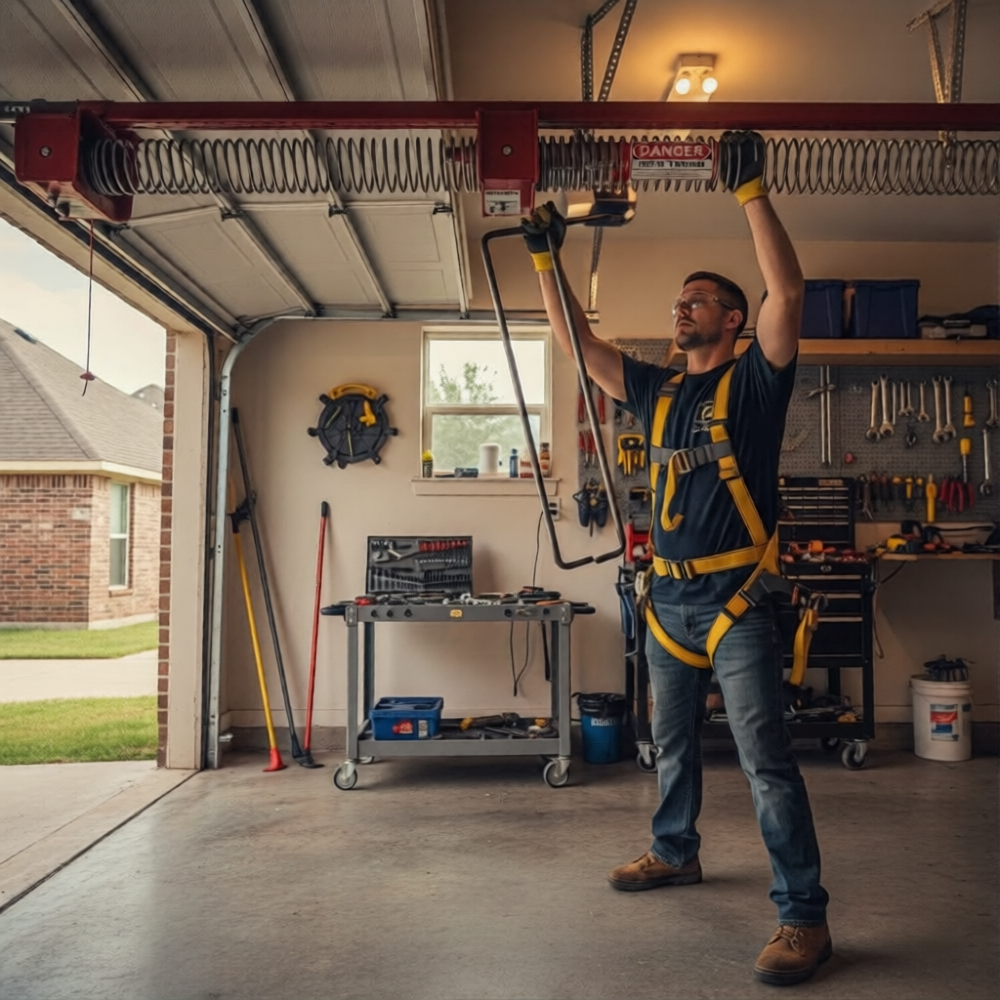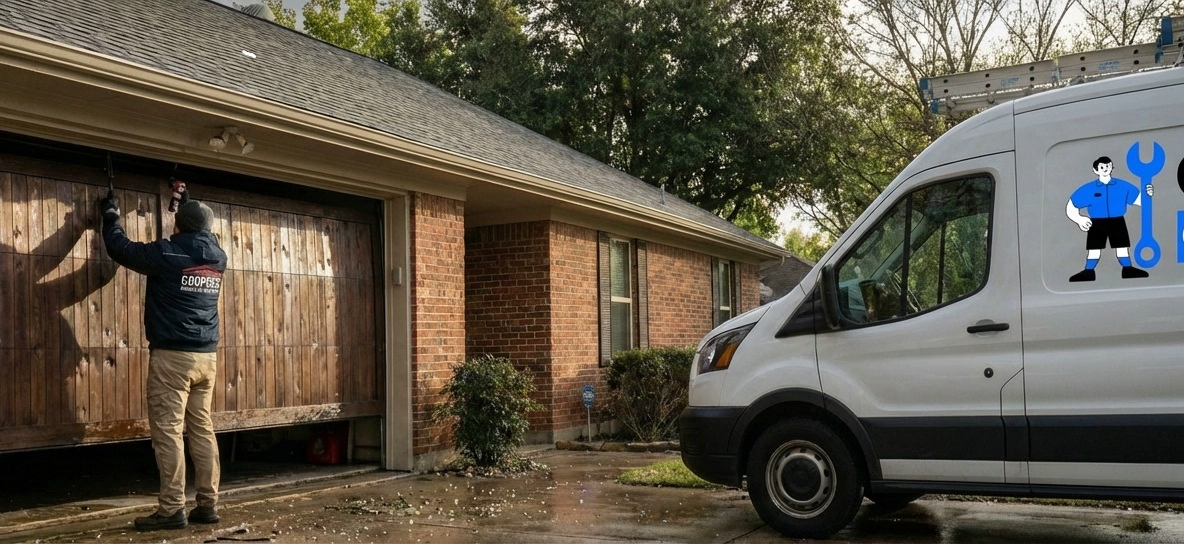
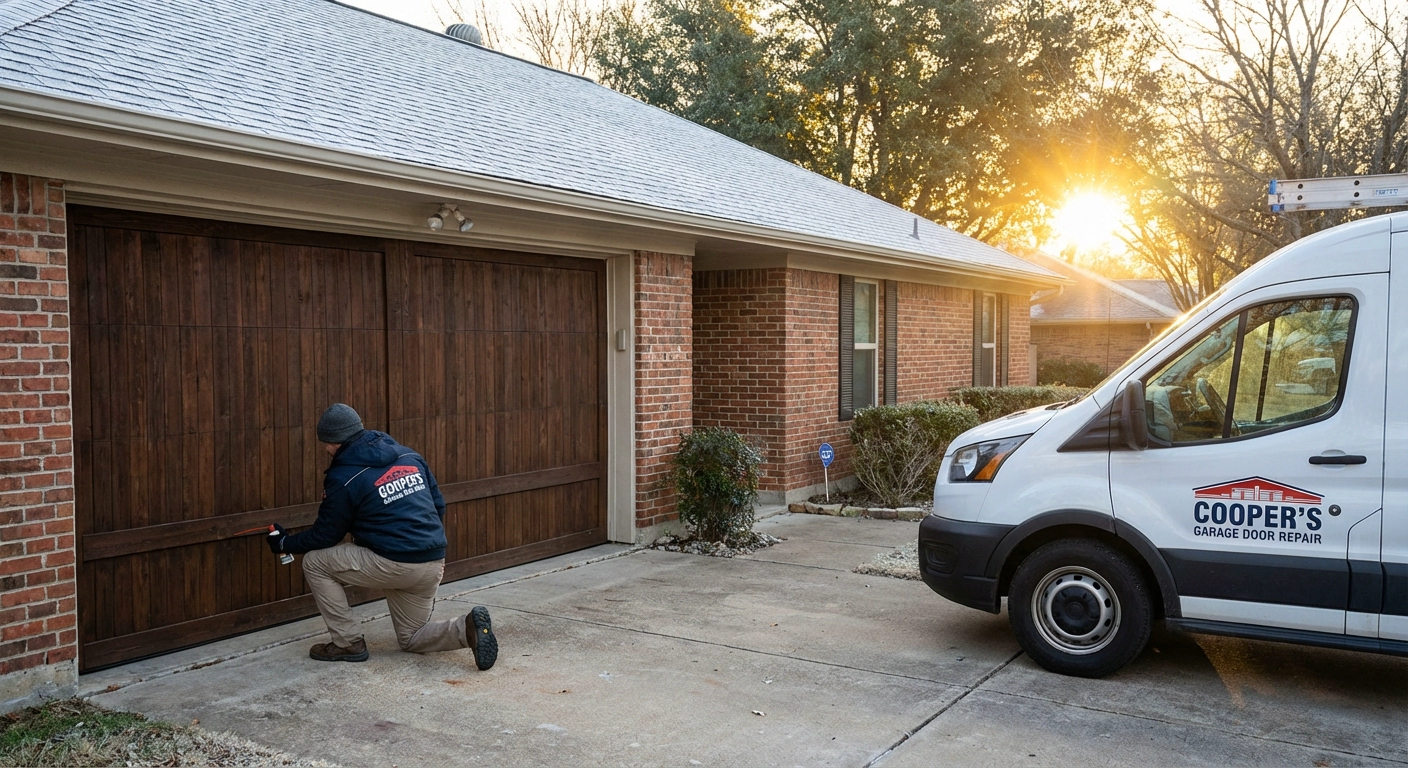
How to prepare your garage door for winter isn’t just a Northern state ritual. In Dallas, TX, where January temps can dive below 25 °F overnight and ice storms snap power lines, your garage door becomes the largest thermal barrier in your home. A poorly prepped door can spike heating bills, freeze pipes, and leave your car buried under a sheet of ice. Below, Coopers Garage Door Repair walks you through insulation upgrades, lubrication schedules, and safety checks that keep North Texas winters outside where they belong.
Quick Snapshot for Skimmers
– Weather-strip blocks cold air and pollen; replace if you see daylight.
– Nylon-sealed rollers survive freeze-thaw cycles better than bare steel.
– Torsion springs need tension adjustment when mercury drops.
– Insulated steel doors reduce heat loss and quiet road noise.
– Annual tune-up costs less than one emergency Sunday service call.
Why Winter Prep Matters in Dallas, TX
Unlike Minnesota, Dallas winters are short but volatile. A single Arctic front can drop the temperature 40 degrees in six hours. Your garage door, made of metal, plastic, and wood, reacts to that swing by expanding and contracting. Without proper prep, you’ll face:
– Frozen opener gears that burn out motors
– Brittle springs that snap under load
– Warped seals that let in cold air and critters
– Ice buildup that glues the door to the floor
Plus, many North Texas homes run plumbing through the garage. A frozen pipe bursts and floods the space, turning a cold inconvenience into a five-figure insurance claim.
Step 1: Inspect and Replace Weather Sealing
Bottom Seal
Choose EPDM rubber rated for -30 °F to 150 °F. The old vinyl strip turns rock-hard below 40 °F and cracks when the door hits the floor.
Side and Top Seals
Bulb-style vinyl compresses to block wind. If you see daylight, cold air is already pouring in.
Seal Retainer Channel
Aluminum or PVC track lets you slide out old seal and slide in new without removing the entire track. Coopers stocks universal retainers that fit most Dallas doors.
Threshold Seal
A rubber hump on the floor creates a speed-bump against water and wind-driven pollen. Great for sloped driveways common in Frisco and McKinney.
Step 2: Lubricate for Cold Weather
Silicone vs. Lithium
Silicone spray stays flexible below freezing; lithium grease can stiffen and clog. Use silicone on rollers, hinges, and the opener chain.
Solution: Annual track alignment check during spring tune-up. Coopers uses laser levels to ensure parallel spacing within factory tolerance.
Torsion Spring Coating
A light oil wipe prevents condensation that turns to ice inside coils. Avoid heavy grease that attracts grit.
Nylon Rollers Upgrade
Sealed bearings keep moisture out and roll quietly when steel rollers would squeal. Upgrade pays for itself in noise reduction alone.
Opener Gear Lube
Chain-drive models need a teaspoon of silicone on the sprocket; belt-drive units require no additional lubrication.
Step 3: Check Spring Tension in Cold Weather
Cold Contraction
Steel contracts when temps drop, reducing spring lift capacity. The door feels heavier and may stop halfway.
Tension Adjustment
A quarter-turn clockwise restores balance. Only a trained technician should perform this; springs store lethal energy.
Galvanized vs. Oil-Tempered
Galvanized springs resist rust better in humid garages. Coopers includes galvanized as standard on all spring replacements.
Cycle Rating
Choose springs rated for 25,000 cycles or more. Dallas temperature swings shorten spring life; higher rating postpones the next break.
Step 4: Insulation Upgrades for North Texas Winters
Polystyrene Panels
Rigid board glued to steel skins provides R-4 to R-6 thermal resistance, cutting heat loss by up to 70 %.
Polyurethane Foam
Injected foam expands and bonds to skins, achieving R-12 to R-18. Quiets street noise and adds rigidity against hail.
Vinyl Back Layer
Acts as a thermal break and prevents condensation on the inside face. Ideal for garages that house gyms or offices.
Insulated Windows
Double-pane tempered glass with thermal spacer keeps cold from transferring through decorative windows.
Step 5: Test Safety Systems Before Ice Arrives
Auto-Reverse Force
Door should stop and reverse when it hits a 2×4 block on the floor. Cold grease increases resistance; adjust force settings.
Photo-Eye Alignment
Frost can cloud lenses, causing false reversals. Clean with a dry microfiber cloth; no ammonia cleaners that cloud plastic.
Battery Backup
If power goes out during an ice storm, a battery backup lets you open the door up to 24 hours. Essential for garages with freezer or medical equipment.
Manual Release Rope
Ensure the red handle is visible and not tangled in storage hooks. Practice disengaging the opener so you’re not learning in the dark at 25 °F.
Step 6: Protect Exterior Hardware
Track BoltsTrack Bolts
Apply a thin coat of silicone spray to prevent rust bloom that locks bolts in place.
Lock Cylinder
If you have a side-mount deadbolt, squirt graphite into the keyhole to prevent freezing. Keep a spare key indoors; metal contracts and can break in the cold.
Hinges
Wipe hinges and coat with silicone. Steel-on-steel squeals louder when cold; nylon hinges stay quiet.
Rollers
Sealed bearings are factory-lubricated for life; no additional grease needed. If you see orange rust, replace rollers before winter.
Step 7: Schedule a Professional Winter Tune-Up
What’s Included
– Balance test and spring tension adjustment
– Lubrication of all moving parts with cold-weather silicone
– Weather seal inspection and replacement quote
– Safety sensor alignment and force setting check
– 25-point hardware inspection report
Book in October or early November before the first freeze. Same-day service is common, but post-storm calls can add wait time.
DIY vs. Professional Risk
You can spray lubricant and change batteries, but spring tension and cable adjustment require special tools and training. One slip can unwind a torsion spring with 500 pounds of force. Coopers carries the correct winding bars and torque meters for safe adjustment.
Long-Term Value vs. Cheapest Option
A winter tune-up costs less than one emergency spring replacement on a Sunday night. Insulated doors recoup investment through lower heating bills and increased resale value in energy-conscious Dallas markets.A winter tune-up costs less than one emergency spring replacement on a Sunday night. Insulated doors recoup investment through lower heating bills and increased resale value in energy-conscious Dallas markets.
Insurance & Warranty Considerations
Most policies cover damage from sudden weather events (hail, wind) but exclude maintenance issues like rust or worn seals. Keep annual service receipts to prove upkeep and speed claims.
Frequently Asked Questions
Replace weather seals, lubricate with silicone, adjust spring tension, and test safety sensors before the first freeze.
Use silicone spray that stays flexible below freezing; avoid lithium grease that thickens in cold.
Yes, steel contracts in cold and becomes brittle; older springs are more likely to snap under load.
Insulation improves thermal efficiency and reduces noise, especially important for attached garages or rooms above.
Inspect annually; replace when you see cracks, daylight, or feel drafts around the door.
Yes, a fully charged battery provides 24+ hours of operation during power outages.
No, torsion springs store dangerous energy; hire a professional with proper tools and training.
EPDM rubber seal rated for -30 °F to 150 °F with an aluminum retainer channel for easy replacement.
Ready for Winter?
Text or call Coopers Garage Door Repair, your Dallas, TX winter-prep specialists. We quote flat, arrive same-day, and back every tune-up with a 90-day workmanship guarantee so the only thing that freezes is your ice cream, not your garage.