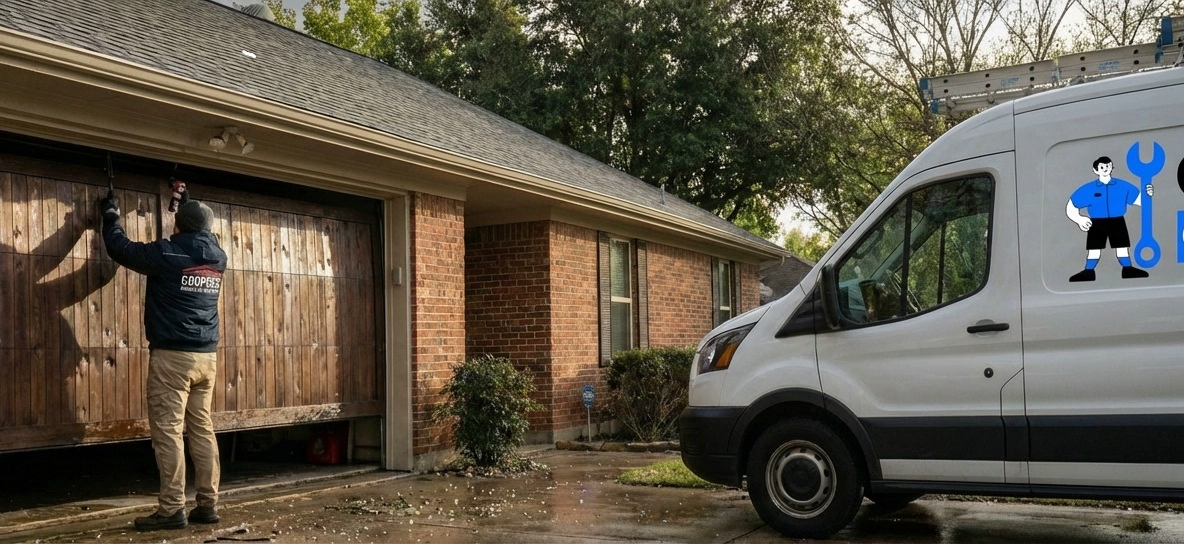
How weather affects garage door performance becomes painfully obvious when a North Texas hailstorm dents every panel or when July heat warps the track so the rollers jump like jackrabbits. In Dallas, TX, where single-day temperature swings can exceed 30 °F and spring storms arrive with baseball-sized ice, your garage door is the largest moving wall of your house, and it takes the first punch. Below, Coopers Garage Door Repair explains which weather events cause the most damage, what warning signs to watch for, and how to keep your door smooth through every season.
Quick Snapshot for Skimmers
- Heat expands metal and dries lubrication, causing noisy operation.
- Hail dents panels and cracks paint, inviting rust under humid conditions.
- Sudden cold snaps make springs brittle and more likely to break.
- Humidity swells wooden doors and frames, misaligning tracks.
- Annual maintenance costs less than one emergency Sunday repair call.
Why Dallas, TX Weather Is Tough on Garage Doors
Extreme Temperature Swings
A February morning can start at 28 °F and hit 70 °F by lunch. Metal tracks, springs, and rollers expand and contract, loosening bolts and shifting alignment.
Hail Frequency
Dallas sits in “Hail Alley.” Ice stones the size of golf balls pummel doors at 70 mph, denting steel, cracking vinyl, and shattering windows.
High Humidity
Gulf moisture drifts north, hovering around 80 % relative humidity in July. Steel panels sweat, springs rust, and wooden doors absorb water like a sponge.
Wind Events
Spring super-cells and fall cold fronts produce straight-line winds over 60 mph. A door that isn’t balanced or locked down can bow inward or pop off tracks.
UV Exposure
North Texas sees 230+ sunny days annually. Ultraviolet rays fade paint and make plastic rollers brittle, leading to premature cracking.
Heat-Related Issues and Fixes
Warped Tracks
Aluminum rail expands faster than steel rollers. When the track widens, rollers wobble and create a metallic grinding sound.
Solution: Annual track alignment check during spring tune-up. Coopers uses laser levels to ensure parallel spacing within factory tolerance.
Dried-Out Lubrication
Chain-drive openers lose grease in 100 °F heat. A dry chain sounds like a coffee grinder and stresses the motor gear.
Solution: Apply silicone-based lubricant every three months. Avoid WD-40; it attracts dust that turns into abrasive paste.
Brittle Weather-Stripping
Vinyl bottom seal becomes rock-hard and cracks, letting hot air and pests inside.
Solution: Replace with EPDM rubber seal rated for -30 °F to 150 °F; install a retainer channel so replacement takes minutes.
Cold Snap Problems and Prevention
Brittle Springs
Extension springs lose flexibility below 40 °F. A sudden open cycle can snap the coil, dropping the door like a rock.
Solution: Upgrade to galvanized torsion springs with a cycle rating suited for two-car daily use. Coopers includes a lifetime spring warranty on most replacements.
Contracted Metal
Steel shrinks, so cables become slack and can jump off drums.
Solution: Adjust cable tension during winter maintenance. A quick tension check prevents off-drum disasters.
Frozen Openers
Screw-drive models can freeze if condensation forms overnight.
Solution: Use a lithium-based grease on the screw and ensure the opener is enclosed or insulated.
Hail Damage: Dent, Crack, and Rust Cycle
Panel Dents
Cosmetic at first, but dents break paint film. Humidity creeps in, rust blooms, and panels weaken.
Solution: Impact-resistant steel with 24-gauge thickness or vinyl-backed panels absorb energy without cracking.
Window Glass
Single-pane inserts shatter, creating safety hazards.
Solution: Upgrade to double-pane tempered glass or polycarbonate windows that flex instead of break.
Track Misalignment from Impact
A direct hit can bend the track enough to jam rollers.
Solution: Post-storm track inspection and straightening. If bend is severe, replace the rail section.
Humidity and Wood Door Woes
Swelling Frames
Solid wood doors absorb moisture and expand ¼ inch or more. The door rubs the frame, slowing operation and stripping opener gears.
Solution: Seal all six sides with UV-resistant varnish. Consider insulated steel or composite doors that look like wood without the swelling.
Mold Growth
Dark spots appear on the bottom section where water pools.
Solution: Install a sloped concrete apron to divert runoff and add a weather seal retainer.
Loose Hinges
Humidity softens wood screws.
Solution: Replace standard screws with 3-inch lag screws that bite into the framing studs.
You May Like To Read: How to Stop Garage Door From Reversing When Closing?
Wind Events: When Doors Become Walls
Pressure Build-Up
High winds create positive pressure inside the garage, pushing the door inward.
Solution: Install wind-load reinforcement struts and a locking latch system. Coopers can retrofit most doors to meet FEMA guidelines for hurricane-prone regions.
Track Lift-Off
Doors without proper end bearings can jump track during gusts.
Solution: Upgrade to sealed bearing rollers and add angle-iron track brackets.
Opener Force Settings
Factory settings may be too low, causing the door to reverse in heavy wind.
Solution: Adjust force settings after reinforcement; test with a 2×4 block under the door to ensure proper auto-reverse.
UV Exposure: The Silent Killer
Faded Paint
South-facing doors lose color fastest, reducing curb appeal and resale value.
Solution: Apply UV-blocking clear coat every two years or choose a factory-baked finish with UV inhibitors.
Brittle Plastic
Rollers and sensor housings turn yellow and crack.
Solution: Upgrade to nylon-sealed bearing rollers rated for UV exposure.
Sealant Breakdown
Caulk around trim dries and cracks, allowing rain to reach the frame.
Solution: Use polyurethane sealant rated for 50 % joint movement; inspect each spring.
Annual Maintenance Checklist for North Texas Weather
Spring
- Inspect panels for hail dents
- Lubricate chain or screw drive
- Test balance and auto-reverse
Summer
- Check weather seal for cracks
- Clean photo-eye lenses
- Verify opener force settings
Fall
- Tighten bolts on hinges and tracks
- Apply fresh coat of UV protectant
- Replace batteries in smart opener
Winter
- Adjust spring tension for cold contraction
- Inspect cables for fraying
- Confirm remote battery strength
Smart Tech That Monitors Weather Impact
MyQ or Genie Aladdin Connect
Send alerts if the door opens during a storm or if the opener overheats.
Temperature Sensors
Some openers reduce speed when ambient temp exceeds 100 °F, protecting motor windings.
Vibration Sensors
Detect track misalignment after wind events and push notifications to your phone.
Insurance Considerations
Most Dallas homeowners policies cover hail damage to garage doors if you file promptly and provide photos. Maintenance-related issues (rust, worn springs) are typically excluded. Keep annual service receipts to prove upkeep.
Frequently Asked Questions
1. How does hot weather affect garage door performance in Dallas, TX?
Heat expands metal tracks, dries lubrication, and can warp plastic components, causing noisy or jerky operation.
2. Can hail damage a garage door in North Texas?
Yes, hail can dent steel panels, crack vinyl, and break windows, leading to rust and misalignment if not repaired.
3. Why does my garage door stick when it’s humid?
Humidity swells wooden doors and frames, creating friction against the track; steel doors may sweat and rust.
4. What is the best garage door material for Dallas weather?
Insulated steel or composite doors resist dents and humidity better than wood, especially when paired with UV-blocking paint.
5. How often should I lubricate my garage door in Texas?
Every three months during high-heat seasons, using silicone-based products that don’t attract dust.
6. Will insurance cover weather-related garage door damage in Dallas?
Most policies cover sudden damage like hail, but exclude normal wear and tear; photos and maintenance records help claims.
7. Can I install weather stripping myself?
Yes, but choose EPDM rubber and a retainer channel for best results; professional install ensures even sealing.
Ready to Weather-Proof Your Door?
Text or call Coopers Garage Door Repair, your Dallas, TX weather-performance experts. We quote flat, arrive same-day, and back every service with a 90-day workmanship guarantee so the only thing that bows is the grass, not your garage door.